The Complete History of Pickleball: From a Backyard in 1965 to 36 Million Players
Pickleball did not start with a grand vision or a sporting goods company behind it. It started on a summer afternoon in 1965 when three families came home to bored kids and no obvious plan.
What came out of that afternoon - improvised, unpolished, and named after a rowing term most people have never heard of - is now the fastest-growing sport in the United States. 36 million players. A professional league. Courts in parking lots and church basements and Olympic training facilities.
Here is exactly how that happened.
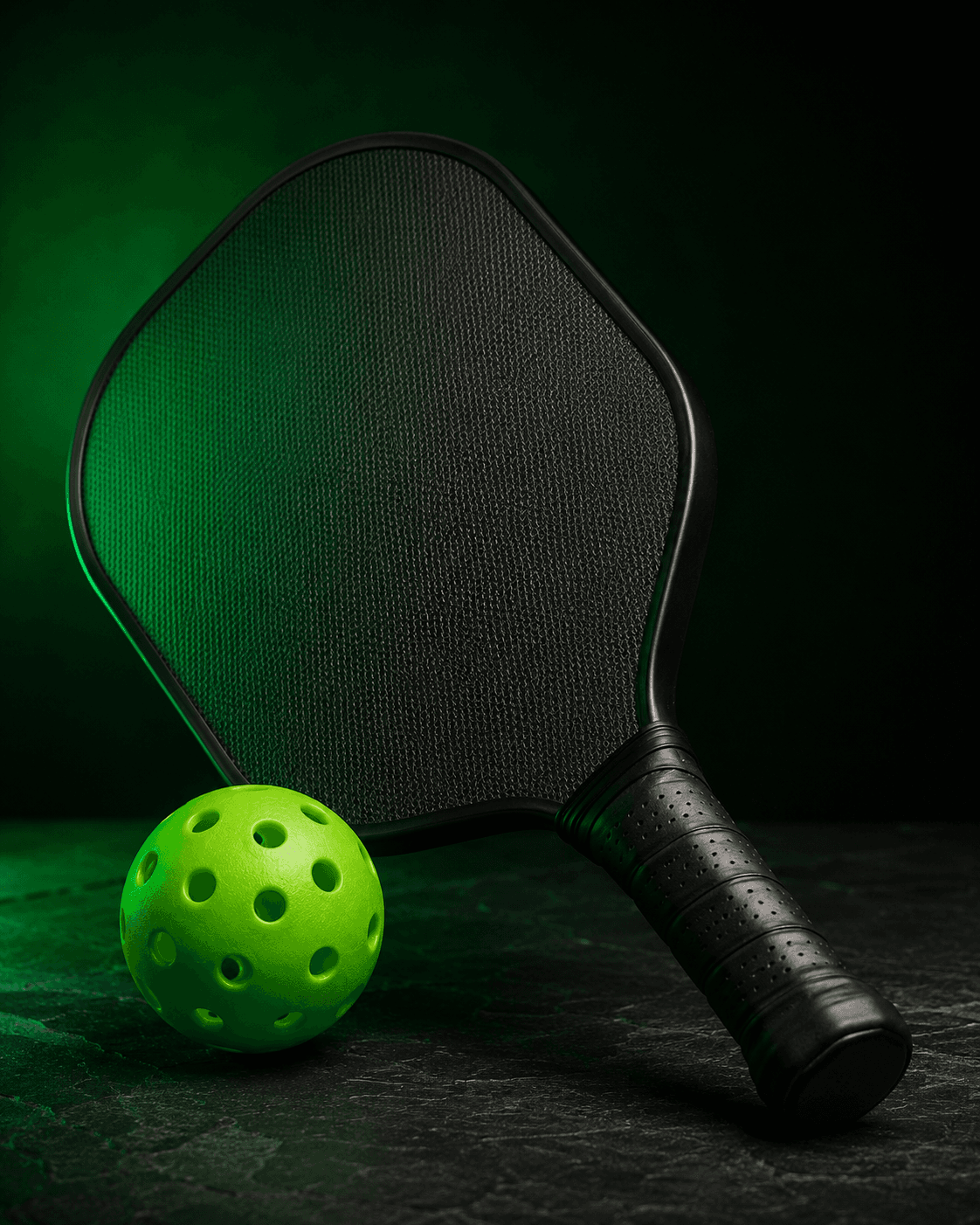
Summer 1965: How It Started
In the summer of 1965, Joel Pritchard - a Washington State legislator who would later serve in the US Congress - returned to his home on Bainbridge Island with his friend Bill Bell. Their children were restless with nothing to do.
The Pritchard property had an old badminton court, but no full set of badminton equipment. Rather than send the kids inside, Pritchard and Bell improvised: they grabbed ping pong paddles, found a perforated plastic wiffle ball, and lowered the badminton net. When their friend Barney McCallum joined them the following weekend, all three families were playing.
The game they were playing was not badminton. It was not tennis. It was not ping pong. It was something new, with its own rules that emerged organically from what worked on that specific court, with that specific equipment.
Within days, they had settled on a set of rules. The kitchen - the non-volley zone extending 7 feet from each side of the net - was one of the earliest and most defining design decisions. It prevented players from simply standing at the net and smashing every ball, which gave the game its distinctive soft-game strategy.
To learn what the kitchen rule means and how it shapes the game today, see our kitchen rules guide.
The pickleball court: 20 ft wide, 44 ft long - the same width as a doubles tennis court but roughly a quarter of the total area.
Why Is It Called Pickleball?
This is the question everyone asks, and there are two competing answers.
Joan Pritchard, wife of co-inventor Joel Pritchard, has stated that she named the game after the "pickle boat" in crew rowing. In rowing, the pickle boat is the vessel assembled from leftover oarsmen not selected for the other boats - the crew made from the odds and ends. Joan saw pickleball the same way: a sport assembled from the leftover equipment of badminton, ping pong, and tennis. This is the naming story most historians and the Pritchard family cite.
A widely repeated alternative story says the sport was named after the Pritchard family's cocker spaniel, Pickles, who loved to chase the ball. This version circulates frequently online and is repeated in many general-interest articles. The problem: the Pritchards got the dog Pickles in 1968 - three years after the game was named. Most evidence suggests the dog was named after the sport, not the other way around.
The pickle boat story is better documented and supported by primary accounts. But the dog story is more fun, and so it keeps coming back.
From Backyard Game to Organized Sport (1967–1990)
In 1967, the first permanent pickleball court was built in the backyard of Bob O'Brian, a neighbor and friend of the Pritchards on Bainbridge Island. It was no longer just a game improvised on an old badminton court - it was a game worth building a court for.
In 1972, the three co-inventors incorporated the sport as Pickleball, Inc., establishing legal protection and beginning the process of standardizing the rules. This was an unusual move for what was essentially still a backyard game, but it reflected how seriously the founders took what they had created.
National media coverage came in 1975 with a feature in Tennis Industry magazine. The first known organized tournament followed in 1976 at the South Center Athletic Club in Tukwila, Washington - a short drive from where the sport was born.
The pivotal institutional milestone came in 1984, when Sid Williams founded the USA Pickleball Association (USAPA) and published the first official rulebook. For the first time, pickleball had a governing body and standardized rules that any court anywhere in the country could follow.
By 1990, pickleball was being played in all 50 states. It was no longer a regional Pacific Northwest curiosity. But its growth was still quiet - mostly in retirement communities and recreation centers, driven by older adults who appreciated the smaller court, the underhand serve, and the social atmosphere.
The Quiet Years: Growing in the Background (1990–2019)
From 1990 through the early 2010s, pickleball grew at a steady but unspectacular pace. It was not a trending sport. It was not on ESPN. It was, for most Americans, something their grandparents played at the community center.
That reputation underestimates how real the growth was. By 2009, an estimated 100,000 people were playing regularly in the US. By 2013, the USAPA reported approximately 150,000 players and more than 5,000 courts. By 2016, that number had risen to 2.5 million players.
The retirement community demographic drove most of this. Pickleball offered the social and competitive experience of tennis with a fraction of the physical demand. Smaller court, underhand serve, lower ball speed - all features that made it accessible to players in their 50s, 60s, and 70s who might have left tennis behind.
At the same time, a younger competitive scene was quietly developing. The APP Tour (Association of Pickleball Professionals) and PPA Tour (Professional Pickleball Association) both began building out professional structures, creating a pathway for elite players that had not previously existed.
The Explosion: COVID-19 and the Mainstream Breakthrough (2020–Present)
The COVID-19 pandemic in 2020 changed everything. As gyms closed and indoor sports became impossible, Americans looked for outdoor activities they could do in small groups with people they trusted. Pickleball was a near-perfect fit: small court (often two courts fit in a standard tennis court), two to four players per game, easy to learn, no physical contact.
New courts appeared in driveways, parking lots, and parks across the country. Sporting goods stores sold out of paddles. The game that had spent 55 years as a quietly popular retirement activity suddenly had players in their 20s and 30s.
In 2021, the Sport and Fitness Industry Association named pickleball the fastest-growing sport in America. It held that title in 2022 and 2023 as well.
2022 brought professional investment at a scale the sport had never seen. Major League Pickleball launched as a franchise-based professional league. LeBron James, Tom Brady, Kevin Durant, and Drew Brees all invested in MLP franchises. The athletes were followed by media companies, private equity, and traditional sports ownership groups. Pickleball had attracted serious money.
By 2024, the estimated US player count had reached 36 million. The sport is now played in more than 70 countries, with growing competitive scenes in Europe, Canada, and Southeast Asia.
From Ping Pong Paddles to Carbon Fiber: Equipment Evolution
The paddles of 1965 were literal ping pong paddles - small, wooden, and never designed for a perforated ball on a badminton-sized court. As the sport formalized through the 1970s and 1980s, purpose-built wooden paddles became the standard. They were heavier and larger than ping pong paddles, but still basic by modern standards.
Composite materials entered pickleball in the late 1980s and through the 1990s. Graphite faces offered a stiffer, more responsive hitting surface than wood. Fiberglass alternatives provided a softer feel with more forgiveness. Polymer honeycomb cores - borrowed from aerospace engineering - began replacing wooden cores, producing a quieter, more controlled feel.
By the 2010s, the paddle had become a genuine piece of sporting equipment rather than an improvised tool. Carbon fiber faces, textured surfaces designed to maximize spin, and edge guards engineered for durability all became standard in the premium market.
Today, paddles range from $30 entry-level options to $200+ professional-grade composite paddles optimized for specific play styles - power, control, spin, soft game. If you are choosing your first paddle, see our best beginner paddles guide or take the Paddle Finder quiz to get a personalized recommendation in 60 seconds.
Pickleball Timeline
Joel Pritchard, Bill Bell, and Barney McCallum invent the game on Bainbridge Island, Washington
First permanent pickleball court built in neighbor Bob O'Brian's backyard
Founders incorporate Pickleball, Inc. to protect the sport and codify the rules
First national media coverage in Tennis Industry magazine
First known tournament held at South Center Athletic Club in Tukwila, Washington
USA Pickleball Association (USAPA) founded; first official rulebook published
Pickleball played in all 50 US states
Estimated 100,000 players in the United States
USAPA reports 2.5 million players and growing national court infrastructure
COVID pandemic accelerates growth; named fastest-growing sport in America for the first time
Major League Pickleball launches; LeBron James, Tom Brady, and Kevin Durant invest in franchises
Estimated 36 million US players; sport played in 70+ countries worldwide
Pickleball Today: By the Numbers
Frequently Asked Questions
Who invented pickleball?
Pickleball was invented in 1965 by three friends: Joel Pritchard, Bill Bell, and Barney McCallum. They created the game at Pritchard's home on Bainbridge Island, Washington, using improvised equipment to entertain their children.
Why is it called pickleball?
The most historically supported explanation: Joan Pritchard (Joel's wife) named it after the "pickle boat" in crew rowing - the boat assembled from leftover oarsmen not chosen for other boats, because pickleball was similarly assembled from leftover sporting equipment. A competing story says it was named after the family dog Pickles, but the dog was acquired in 1968 - three years after the sport was named.
Where was pickleball invented?
On Bainbridge Island, Washington State, at the home of Joel Pritchard. The first permanent court was built nearby in 1967 at neighbor Bob O'Brian's property.
When did pickleball become the fastest-growing sport in America?
The Sport and Fitness Industry Association first named pickleball the fastest-growing sport in America in 2021, a distinction it held through 2022 and 2023. The COVID-19 pandemic was the primary accelerant, as the outdoor small-group format suited the social restrictions of that period.
Is pickleball older than I think?
Yes - most people are surprised to learn pickleball is 60 years old. It spent its first 55 years as a niche sport, primarily popular in retirement communities, before breaking into mainstream awareness during the early 2020s.
Unfamiliar with any terms in this guide?
Pickleball Glossary →Ready to Play the Sport That Started in a Backyard?
Answer 3 quick questions and get matched to the right paddle for your skill, style, and budget.
Find My Paddle →